

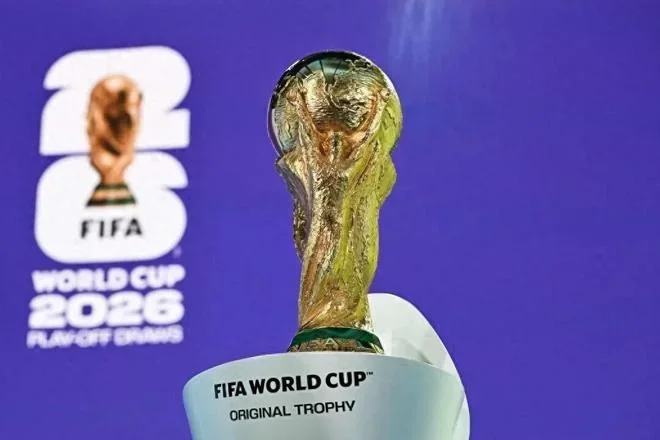
With the 2026 FIFA World Cup in the United States, Canada, and Mexico fast approaching, a bitter dispute over broadcast rights has pushed CCTV and FIFA to a breaking point.
For the first time in 36 years, the long-standing partnership between China’s state broadcaster and world football’s governing body is teetering on the edge of collapse.
On May 4, FIFA issued an official response to the escalating copyright quarrel in China, acknowledging that negotiations are still ongoing but refusing to disclose details. CCTV, however, remains unyielding, sticking to its public media budget amid a sharp hike in licensing fees that has more than doubled since the last tournament.
This deadlock has laid bare what many see as a pattern of excessive pricing in international sports rights.

**The Six-Month Standoff**
For decades, Chinese football fans have enjoyed free World Cup broadcasts via CCTV, which has held exclusive rights since 1990. In 2018, the broadcaster began sublicensing digital rights, but the model remained stable until now.
Negotiations for the 2026 World Cup kicked off in November 2025. This edition boasts an expanded format—48 teams and 104 matches—which boosted its commercial appeal. In response, FIFA raised its initial offer for Chinese mainland rights to a staggering $250–300 million (roughly 18–21 billion yuan). That represents a leap of over 60% from the $150–200 million CCTV paid for the 2022 Qatar World Cup.
CCTV’s budget, however, hovers around $60–80 million—just a fraction of FIFA’s asking price. Multiple rounds of talks over six months have failed to bridge the chasm.
As a state-owned public service platform, CCTV is not a purely commercial entity. Its mandate includes promoting sports culture and providing free access to major events. Overpaying for rights would inevitably drive up advertising costs or force viewers into a pay-per-view model—both undesirable outcomes. That’s why CCTV insists its budget is non-negotiable.
As of May 5, just 36 days before the tournament opener on June 11, no deal has been signed. Chinese fans face the unsettling prospect of no official channel to watch the World Cup for the first time in decades.
**FIFA’s Response Hints at Stance**
After heated online debate, FIFA broke its silence via an email statement to Reuters. A spokesperson confirmed that negotiations for Chinese mainland rights remain “ongoing” and that all terms are confidential.
Historically, World Cup broadcast deals in China have been sealed at least six months before kickoff, leaving ample time for marketing and production. This last-minute delay is unprecedented.
FIFA’s seemingly neutral tone reflects its core priority: maximizing revenue from an expanded tournament. Besides China, India and other major markets are also facing stalled talks due to elevated pricing.
China is the world’s biggest audience for the World Cup. During the 2022 tournament, Chinese viewers accounted for nearly half of global digital watch time. Such a massive fan base makes China a prime target for revenue generation. Yet instead of fair pricing, FIFA appears to be applying a premium that many find unjustified.
Moreover, with China’s national team absent from the 2026 event, domestic enthusiasm is already tepid. To demand higher fees without a home team factor seems commercially illogical.
**The Bigger Picture: A Market at a Crossroads**
The prolonged impasse has opened the eyes of millions of Chinese football fans to the realities of global sports rights licensing.
Free-to-air broadcasts have long been the norm, thanks to CCTV’s public service role. For over two decades, viewers have enjoyed zero-cost access to the World Cup, European Championships, and other top-tier events. This model is a form of cultural welfare, not a pay-for-play commodity.
If CCTV caves to FIFA’s demands, it could set a dangerous precedent. Future rights for all major tournaments would likely soar, eventually forcing Chinese viewers to pay for content they’ve always seen for free.
China has already witnessed backlash over pay-per-view matches. During the 2024–2025 period, some online platforms charged for certain World Cup qualifiers featuring China’s national team, triggering widespread resentment.
Full commercialization of sports events could erect barriers between ordinary people and their love of the game. Watching football is a leisure activity, not a necessity. Exorbitant pricing risks shrinking the domestic fan base and stunting the growth of local football culture.
Of course, FIFA’s commercial ambitions are understandable. Expanded tournaments carry higher operational costs. But revenue growth should not come at the expense of market-specific fairness. China has consistently welcomed global events, offering a massive consumer base and enthusiastic audiences. In return, it deserves partners that respect fair play—not those that treat the country as an easy target for price gouging.
CCTV’s refusal to accept the inflated fee marks the first time a Chinese state platform has pushed back against what many see as predatory pricing by a global sports body. It could become a turning point.
**Conclusion: Protecting the Spirit of Sport**
Over-commercialization risks stripping sports of their essence, alienating the very fans who fuel the game’s passion. China’s sports broadcasting landscape is evolving, and this standoff may help shape fairer, more audience-friendly rules in the years ahead.
Sources: Based on public reports and statements. Discretion advised.
