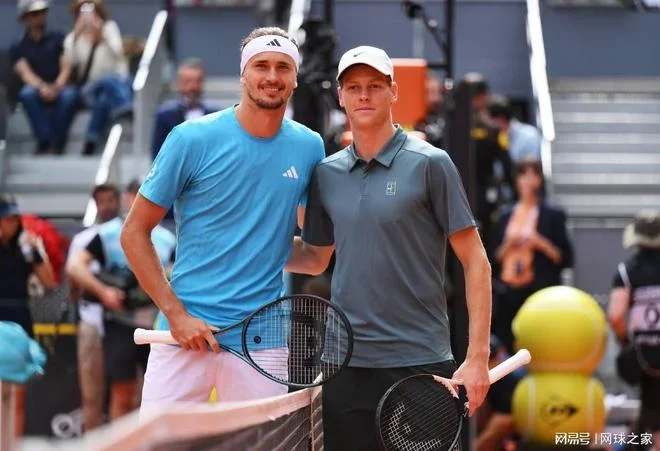

Uncle Toni has recently stirred up the tennis community with a candid interview on Spain’s Onda Cero radio station. He discussed the recently concluded Madrid Masters final, and his remarks left many stunned—not because they were outrageous, but because he finally spoke some hard truths, one after another, without holding back.
Let’s start with Alexander Zverev. The Madrid final ended in just 57 minutes, with a scoreline of 6-1, 6-2. The world No. 3 was utterly dismantled by the world No. 1. Anyone who watched the match would agree it looked more like a practice session than a final.
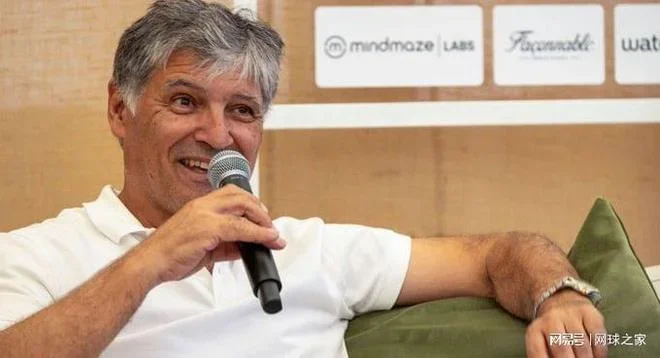
Uncle Toni didn’t mince words: “A final between the world No. 1 and world No. 3 should never end in under an hour.” He diagnosed the problem—not a weak backhand or poor serving, but a complete mental collapse. “Zverev essentially conceded defeat in the locker room before stepping on court.”
Harsh? Absolutely. But is it accurate? Think about it.
While Uncle Toni has a reputation for sensational statements, this time, his assessment seemed spot on.
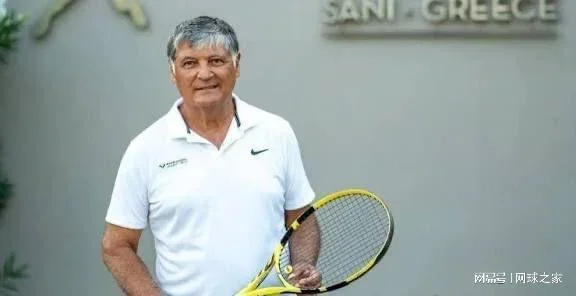
More explosively, Uncle Toni revealed a private conversation he had with Zverev. He asked Zverev: “If you had to choose between Jannik Sinner and Carlos Alcaraz, who would you rather face?” Zverev replied without hesitation: “Alcaraz.”
That answer reveals one thing: fear. Not because Alcaraz is an easier opponent, but because Sinner has become more than a player in Zverev’s mind—he’s a mountain, an impenetrable wall, a system that no amount of power can break. Uncle Toni laid it bare: “For him, Sinner is now an untouchable force.”
This effectively confirms that Zverev’s psychological barrier against Sinner is severe.
Uncle Toni then added a stinging critique: “But in my view, Alcaraz’s ability is no less than Sinner’s.”
The logic is clear: If you think Sinner is invincible and Alcaraz is manageable, you’re misjudging the situation. It’s not that Sinner is unreachable—it’s that you’ve placed him on a pedestal and knelt down beneath it. This isn’t a technical issue; it’s a psychological disease.
Notice how Zverev has played against Sinner in recent matches—each time more cautious and hesitant. In the Australian Open final, he held his own in the first two sets but crumbled at crucial moments, making inexplicable errors. It wasn’t Sinner’s brilliance that beat him; it was his own unraveling. Unforced errors piled up, second serves became timid, and net play looked amateurish. Is that what a world No. 3 should display in a final?
Uncle Toni once said Zverev could challenge Alcaraz if he were willing to change his playing style. Note the phrase: “change his playing style,” not “improve his technique.” He has all the tools—height, reach, powerful serve, solid baseline game—but he doesn’t know how to use them effectively. In tough matches, he relies on brute force, and when that fails, he spirals into self-doubt.
Honestly, Zverev’s problem is well-known in the tennis world. From Boris Becker to Juan Carlos Ferrero to his own father, a string of coaches have come and gone without fixing the core issue: in big finals against top opponents, his hands tremble. In competitive sports, that’s fatal. Technique can be improved, fitness can be built, but when the mind breaks, who can repair it?
What impressed me most about Uncle Toni is that after dissecting Zverev, he turned his attention to the current state of tennis.
“I propose a measure to slightly change the game: require players to use smaller rackets.”
At first, it sounds like a joke or nostalgia. Today’s mainstream rackets are mostly 98 to 100 square inches, sometimes larger. Pete Sampras used 85, Roger Federer used 90 in his prime. Asking modern pros to switch to smaller heads seems far-fetched.
But Uncle Toni’s argument deserves consideration. He said: “Most matches today are just brute force hitting, with no corresponding tactics to counter it.”
Think about recent Grand Slams and Masters events: how many matches featured genuine tactical battles? How many were just baseline slugfests where the winner was the one who made fewer errors? Tennis has become faster, broadcasts sharper, data systems more advanced—but the game itself has grown monotonous.
Uncle Toni’s point: racket technology has made shot tolerance too high. Larger sweet spots and more elastic